Name Your Device
“Wallet Created! — Give your KeepKey a friendly name to identify it easily.”
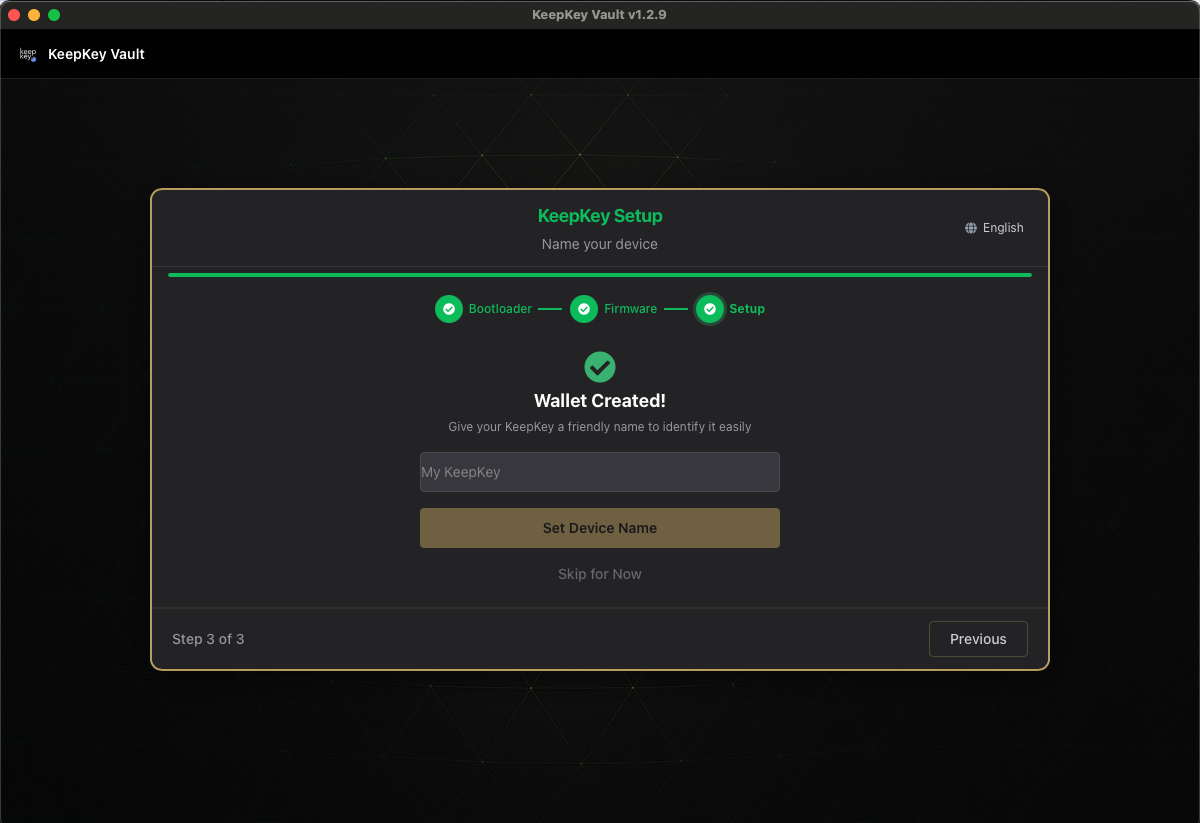
Your wallet now exists on the device. This screen is cosmetic — and optional.
What the label does
The label is stored on the device and shown wherever the device is identified: the device list in the desktop app, the connection prompt, the home screen. If you own more than one KeepKey, or share a machine, it saves you from guessing which device you’re about to sign with.
Confirming on the device
Setting a label calls applySettings, which requires a physical button press on the KeepKey. Look at the device screen and confirm. This is the same pattern used everywhere in KeepKey: a change to the device gets approved on the device, not on the computer.
There is no timeout on this prompt — take as long as you need to read it.
If you decline the confirmation or the prompt goes unanswered, setup continues anyway. The label is optional and never blocks the rest of onboarding.
What to put in it
Do: Cold Storage, Daily, Office, Backup #2, your initials.
Don’t: anything that tells a thief what they’ve found or how much is on it. 20 BTC, retirement fund, or your full legal name are all visible to anyone who picks up the device and powers it on.
The label is not a secret and is not protected by your PIN — treat it as public.
Skip for Now
Perfectly fine. You can set or change the label any time from Settings → Device, with the same on-device confirmation.
What happens next
- If you created a new wallet, the wizard moves to Verify Your Recovery Phrase.
- If you recovered an existing wallet, verification is skipped — you just demonstrated you have the phrase by entering it — and you go straight to the security tips cards.
Related
- Verify Your Recovery Phrase — the next screen
- Settings — changing the label later
- All setup screens