Recovery Phrase
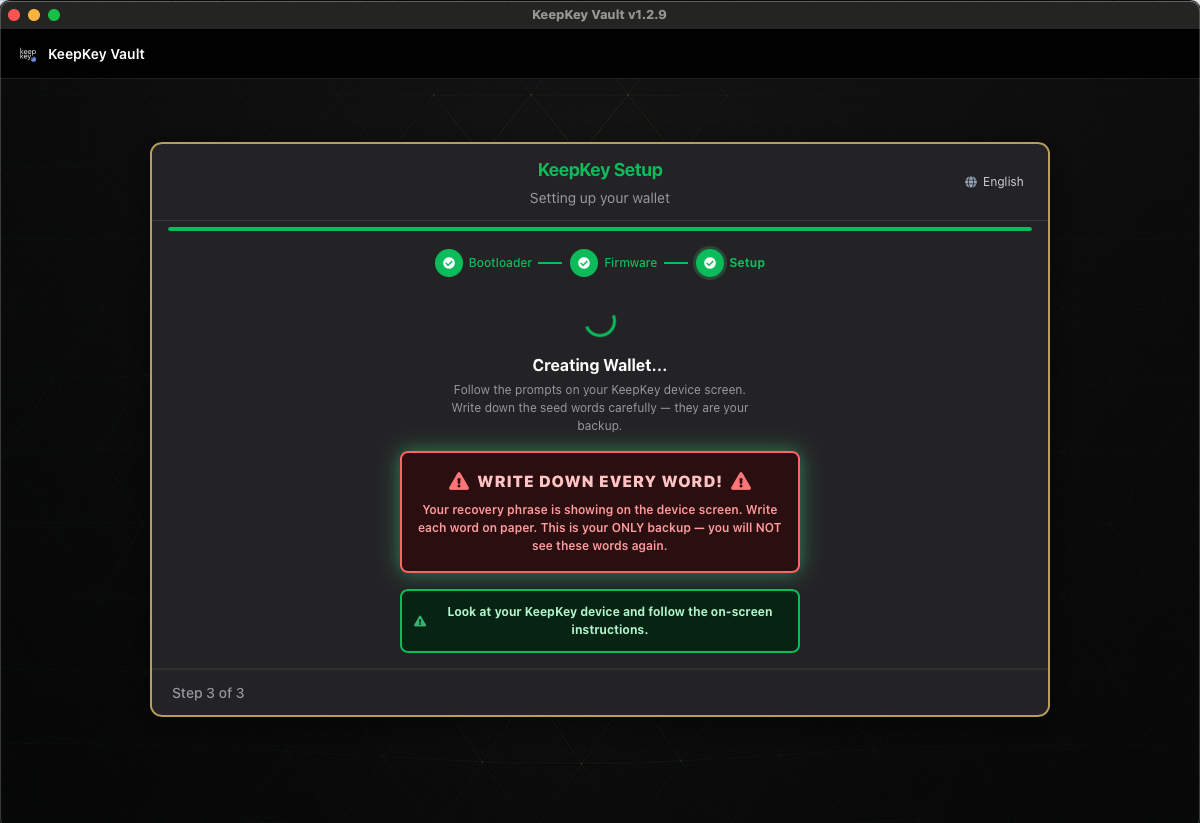
Your recovery phrase is 12 or 24 words the device generates the first time you set it up. These words are the entire wallet. Anyone with these words controls your funds — forever, with no password, no account, and no recovery process.
What the phrase really is
The words are the wallet: lose them and no one can restore your funds; let someone else read them and the funds are theirs. Your Recovery Phrase explains why, and the BIP-39 standard behind it. This page covers storing and restoring it.
How to store it
Do
- Write it on paper with a pen. Pencil fades; ink lasts. Do this in a private place where no one can watch.
- Check it twice. Misspelled words can render the entire phrase useless. The BIP39 word list has very specific spellings.
- Store it somewhere safe and private. A locked drawer. A fireproof safe. A safe deposit box. Somewhere you trust.
- Consider two copies in two locations. A fire can destroy your only paper copy. But every additional copy is another place it can be stolen from — think carefully about the trade-off.
- Consider a metal backup. Cryptosteel, Billfodl, and similar products let you stamp the words into steel plates that survive fire, flood, and decay.
Don’t
- Don’t type the phrase into any computer, phone, website, or password manager. Every one of these is a potential target for malware.
- Don’t photograph it. Photos sync to iCloud, Google Photos, or a backup drive — suddenly your phrase is in a dozen places you didn’t authorize.
- Don’t text or email it to yourself. Email is plaintext forever. SMS is worse.
- Don’t say the words out loud near smart speakers. Alexa, Siri, and Google Home are always listening.
- Don’t trust anyone who asks for it. Real support people never need your phrase. If someone claims to be from “KeepKey support” and asks for your recovery phrase, they are stealing from you.
If something goes wrong
If your device is lost, stolen, or broken, you can recover your wallet on a new KeepKey (or any BIP39-compatible wallet) by entering the recovery phrase. This is why the phrase exists: the device is replaceable; the phrase is not.
If you suspect someone else has seen your phrase, the safest action is to generate a new wallet on a new device and move your funds to the new wallet as quickly as possible. There is no way to “rotate” a recovery phrase.
Restoring a wallet from your phrase
Plug in a new or wiped KeepKey, choose Recover Existing Wallet, and pick the word count you wrote down. After you set a PIN, you enter the words with scrambled recovery entry, so your computer never sees them. Step by step, with fixes for rejected words: Scrambled Recovery Entry.
Related
- Creating Your Wallet — how the device shows you the phrase
- Verify Your Recovery Phrase — test your backup
- BIP85 — generating child seeds deterministically from your main phrase
- Passphrase (Hidden Wallets) — adding a 25th-word secret to derive separate wallets from the same phrase